
Dr. Elias Aoun: Non-Surgical Aesthetics Is a Professional Practice Built on Knowledge and Patient Safety
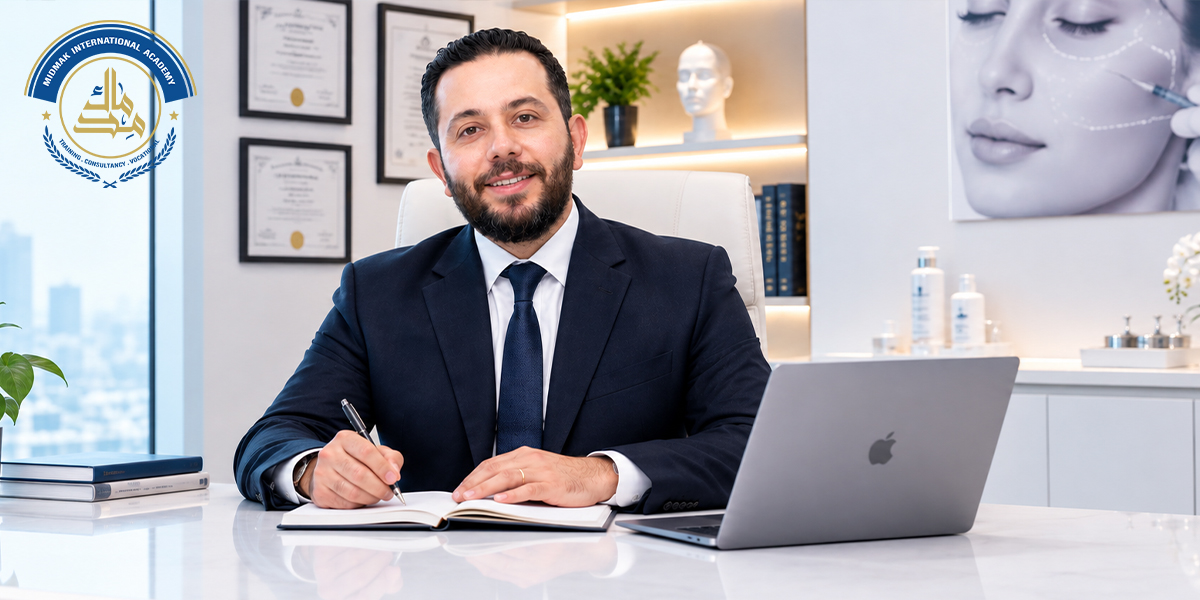
As part of Midmak International Academy’s “Experts and Trainers’ Insights” series, Dr. Elias Aoun, Non-Surgical Aesthetics Trainer, discusses the importance of building professional practice in non-surgical aesthetics on an integrated foundation that combines scientific knowledge, anatomical understanding, practical skills, accurate assessment, and professional responsibility.
Dr. Aoun emphasizes that practicing non-surgical aesthetic techniques should not be reduced to learning a specific technique or procedure. Rather, it requires a comprehensive understanding of the patient’s condition and needs, along with the ability to select an appropriate procedure based on professional assessment, while understanding its limitations, risks, and realistic outcomes.
The ability to assess and communicate with patients is particularly important in this field. Professional practice begins before any procedure is performed by listening to the patient’s needs, understanding their expectations, assessing their suitability for the procedure, and clearly explaining available options, potential risks, and alternatives to support informed decision-making. Modern professional frameworks in non-surgical aesthetic medicine recognize patient suitability assessment and informed consent as essential elements of safe and ethical practice.
Dr. Aoun also emphasizes that technical skills alone are not sufficient. True professional competence develops when practical skills are integrated with scientific knowledge and sound professional decision-making, enabling practitioners to approach different cases with greater precision and responsibility.
From this perspective, effective training in non-surgical aesthetics should go beyond the transfer of information to developing applicable professional competence through the integration of theoretical knowledge and practical training, including case assessment, patient communication, understanding procedures and contraindications, risk awareness, and adherence to safe professional practices.
This perspective is consistent with modern approaches to non-surgical aesthetic training, which incorporate patient communication, informed consent, documentation, ethics, clinical assessment, and practical skills alongside specialized knowledge.
Dr. Aoun further emphasizes that the continuous development of the field makes lifelong learning and ongoing professional development an essential part of professional responsibility, particularly as techniques evolve, procedures diversify, and patient awareness and expectations continue to increase.
This vision aligns with Midmak International Academy’s approach to professional competency development, which views training as an integrated process that moves the learner from knowledge to skill, from skill to competence, and from competence to responsible professional practice.
Experts and Trainers’ Insights | Midmak International Academy